
Concrete Repair and Replacement
Cracked concrete is not always a crisis, and it is not always cosmetic either. A hairline crack across a patio may never move again. A driveway panel that has sunk an inch below its neighbor, a front walk tipped up by a root, or steps that have pulled away from the porch are telling you something is moving underneath, and patching the surface will not stop it. We repair, replace and remove concrete for homes and businesses, and the first thing we do on every job is figure out why it failed.
Why it fails here
Frost does little damage this far south. Around Florence the usual causes are water, roots and load. Rain running off a roof or down a driveway gets under the edge of a slab and washes out the sandy loam that supports it, while the clay a little deeper holds water and goes soft. The slab loses support at one corner, and the next heavy truck snaps it.
Tree roots are the other big one. Loblolly pines and live oaks are everywhere on older lots, and their roots spread just under the surface, where they lift walks and driveway panels a little more every growing season. Add in slabs that were poured thin, with no steel, with no joints, or on fill that was never compacted, and you have most of the broken concrete we get called to look at.
Repair or replace?
We give you a straight answer on this, because the cheapest-looking fix is not always the patch. Cracks that are stable and not separating can be cleaned out and sealed to keep water from reaching the base. Small chipped or spalled areas can sometimes be resurfaced. A single panel that has sunk or broken can be sawn out at the joints and re-poured on a rebuilt base, which leaves the rest of the slab in place.
When cracks cross most of a slab, panels are moving against each other, or the surface is coming apart, replacing it usually costs less over time than patching it every year. For a driveway in that shape, starting fresh with a new drive is often the better money. Every job is priced after we have measured it on site and looked at the base, with the price in writing before any forms go down, and if a repair will do the job, the quote says so.
Root-lifted walks
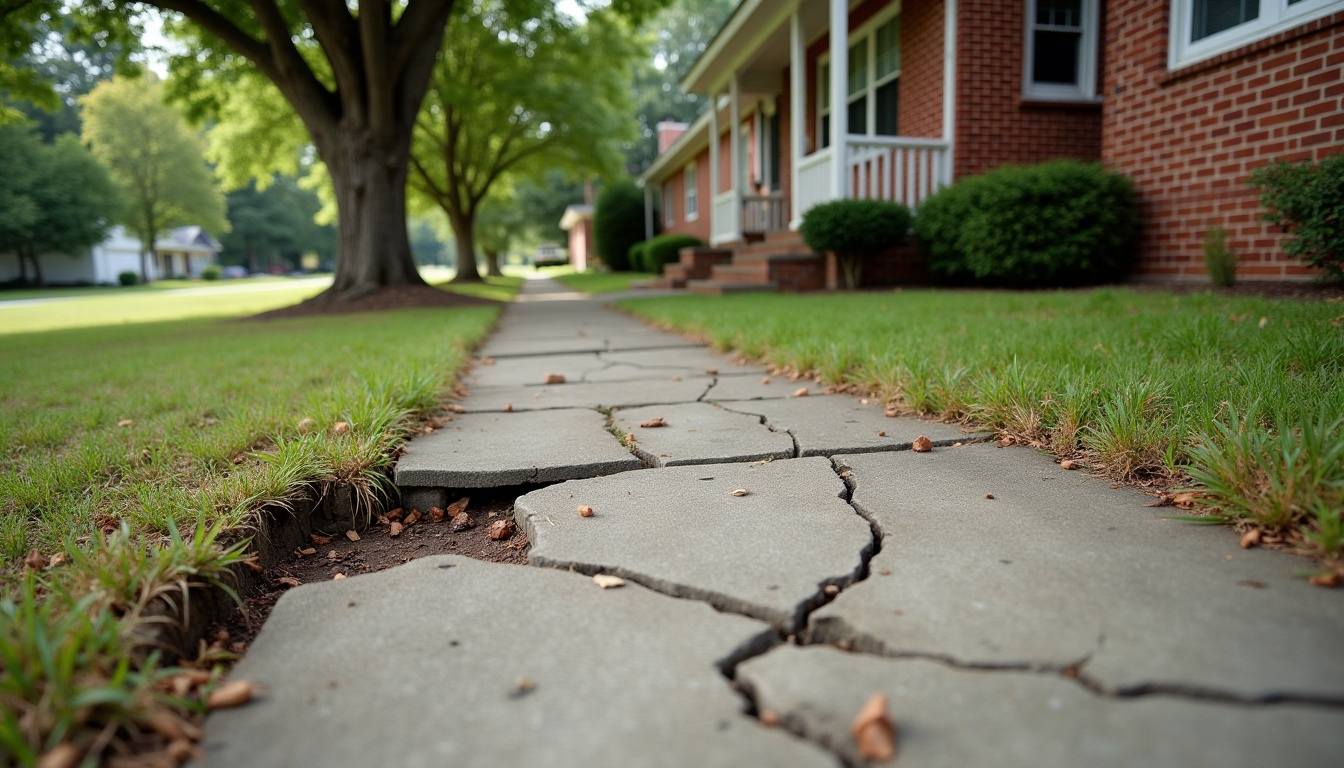
A sidewalk lifted by a root is more than an eyesore; the raised edge is exactly where someone catches a toe. Fixing it properly means cutting out the lifted sections, exposing the root and deciding what to do about it. Small roots can often be cut back. Large roots close to the trunk are a different matter, because cutting them can weaken or kill the tree, and on some lots the right call is to reroute the walk instead.
When the root can be dealt with, we rebuild the base, sometimes add a root barrier along the edge, and re-pour the section to meet the old walk flush. Older streets with mature trees see a lot of this, from the in-town neighborhoods of Florence to the shaded blocks over in Marion, where big old trees and older walks share the same ground.
Steps and sidewalks
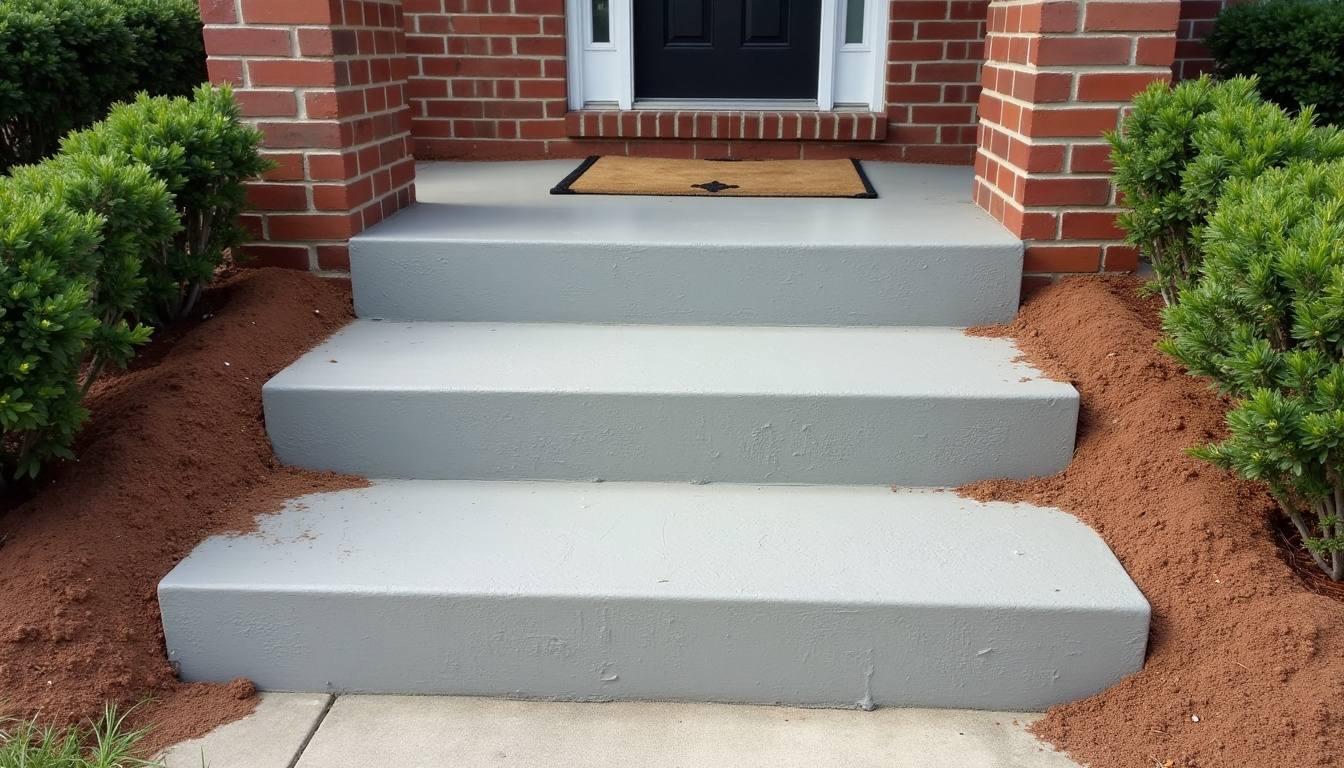
Concrete steps take a beating from weather and feet. Common problems are steps that have settled and pulled away from the porch or house, chipped and crumbling treads, and risers that have gone uneven so the bottom step is taller than the rest. Uneven steps are a real trip hazard, especially carrying groceries after dark. We break out failing steps and form new ones with even risers and treads, a broom finish for grip, and a landing where there is room for one.
New sidewalks get the same base work as a driveway: strip, compact, form, pour, joint. We pour walks from the driveway to the front door, paths around the side of the house to the back yard, and connections between a patio and the drive. If a city sidewalk in the right-of-way is part of the job, the permit question comes up the same way it does with a driveway apron.
Tear-out and haul-off
Sometimes the job is getting concrete out, not putting it in: an old patio in the way of an addition, a cracked pool deck, a slab from a shed that is long gone, or a driveway on its way to being replaced. We break it up, load it out and haul it away, and leave the ground graded and ready for whatever comes next.
Before any saw or breaker touches a slab, utility lines get located, because water and gas lines often run right under old walks and drives. Thick slabs with steel in them take longer to break, which is part of why we look at the concrete in person before quoting. We take on tear-outs from Florence down to the older blocks around Lake City and the farm roads in between.
Related
Concrete Driveways
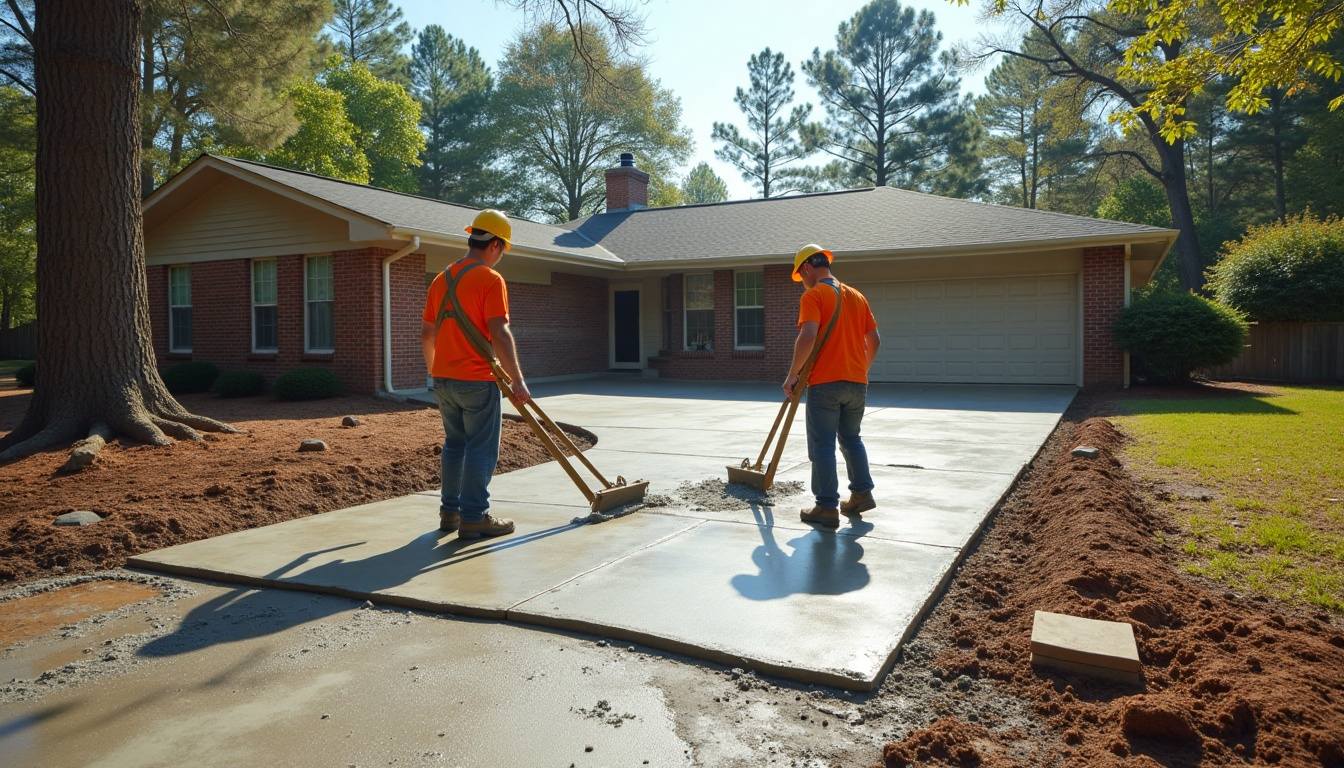
Every drive is poured on a compacted base built for Pee Dee sand.
Patios and Stamped Concrete
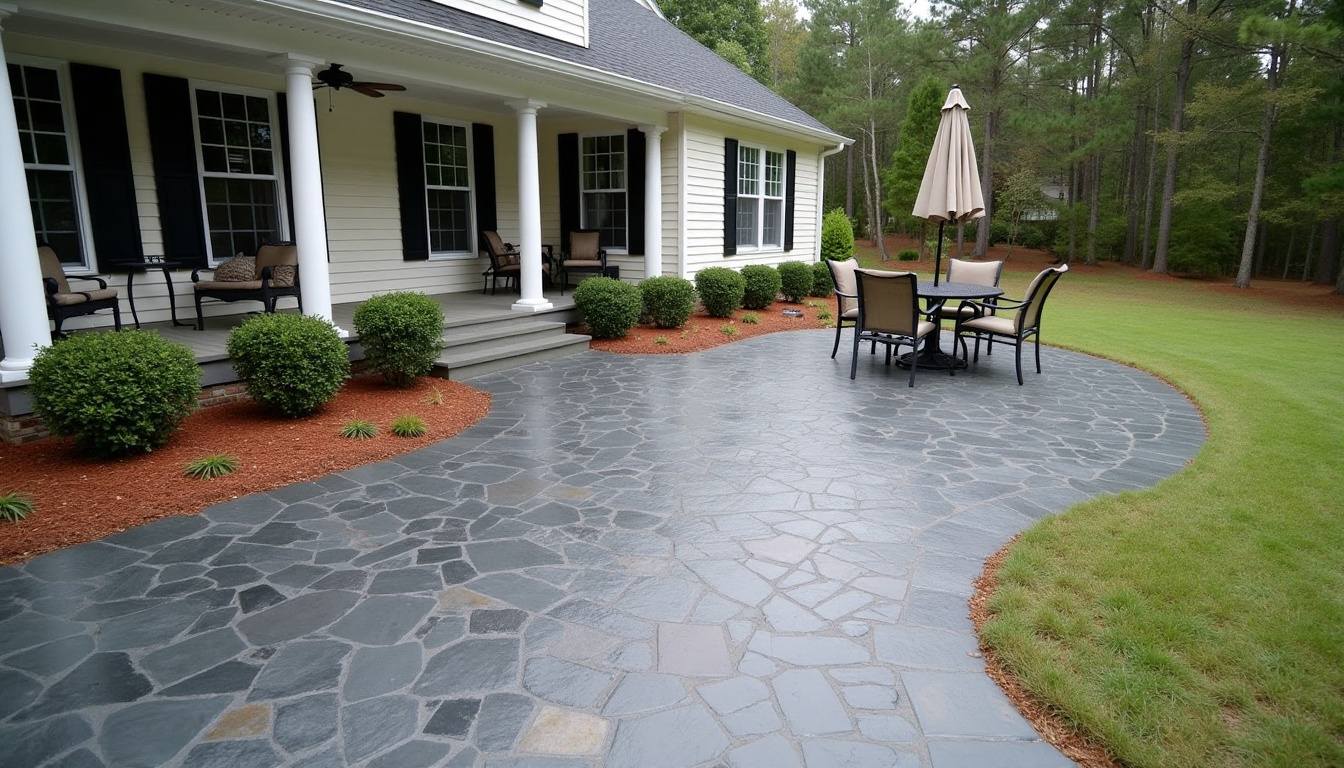
We slope every patio away from the house and seal it against pine sap and summer sun.
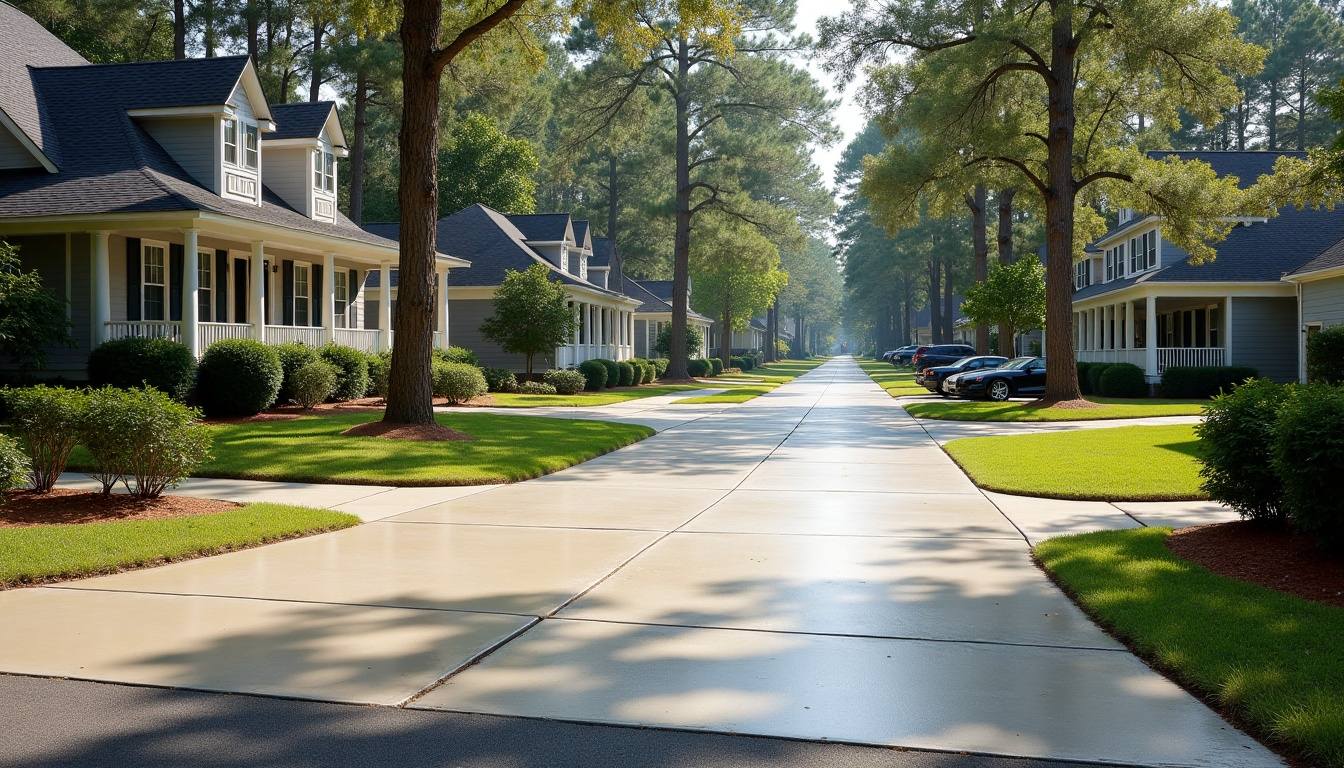
Concrete Work in Marion
Repairs, patios and driveways, quoted in writing.
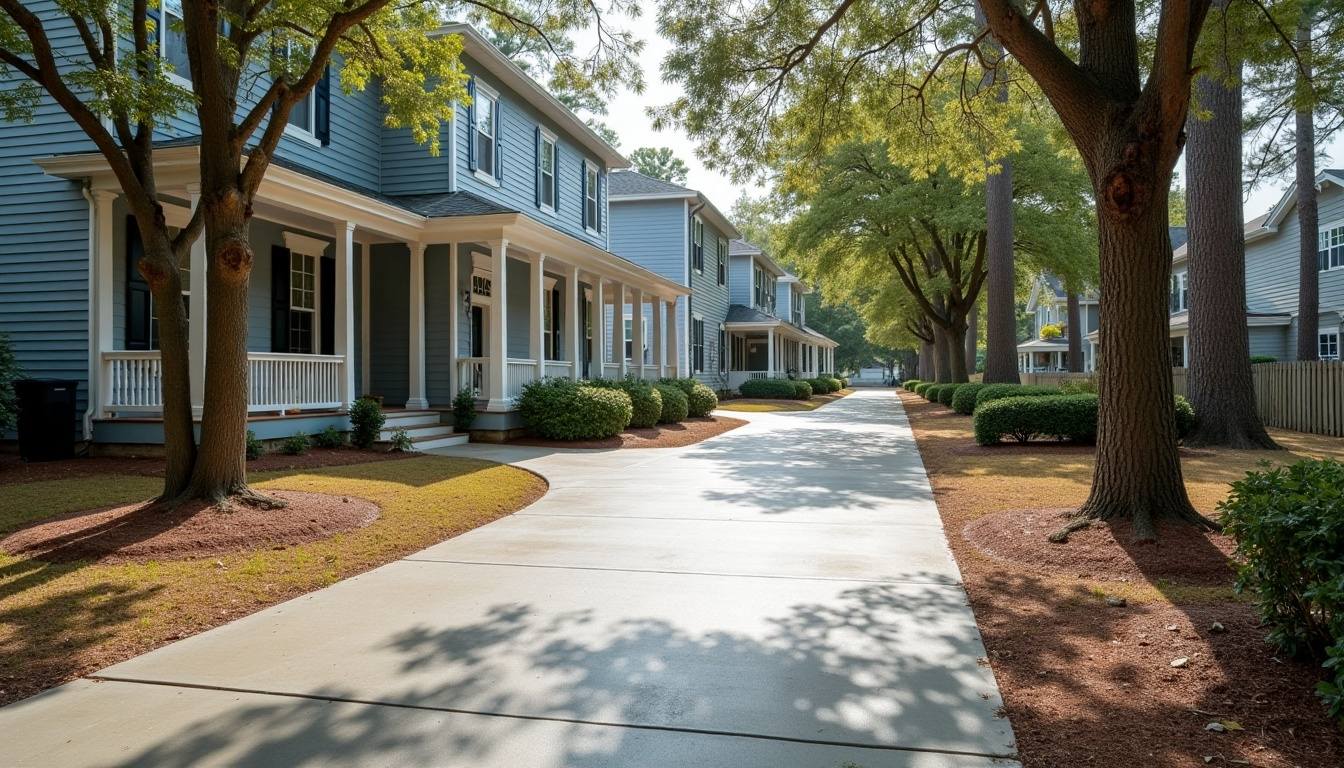
Concrete Repair and New Pours in Lake City
Walks, steps, driveways, slabs and storefront work, measured and quoted in writing.
Show us what is broken
Use the quote form and describe what you are seeing: where the crack is, whether a panel has dropped or lifted, whether there is a tree nearby, and roughly how big the area is. A sentence like "front walk lifted about two inches by the oak in the yard" tells us a lot. We call back, come out and look at it, and tell you whether it needs a repair, a section replaced or a full tear-out. If you are not sure it is worth fixing at all, say so; some of the cracks we look at only need watching.