
Patios and Stamped Concrete
Back yards in the Pee Dee get used most of the year. A patio here has to hold a grill, a table and a few chairs through long humid summers, shed the water from afternoon storms, and stand up to pine needles, sap and a sun that bakes it from May into October. We pour plain broom-finish patios, stamped concrete with color, and exposed aggregate, and we set every one up to drain away from the house.
The look is the part people think about first. The part that decides whether the patio still looks good years from now is the base under it and the slope across it, so we cover both before we ever talk patterns.
Shapes and sizes
Start with what you want to do out there. A pad for two chairs and a small grill is a very different slab than an outdoor dining area for eight with room to walk around the table. We usually suggest laying out the shape with a garden hose or string and living with it for a day or two; it is the cheapest way to find out a patio would have been too small.
Rectangles are simplest, but curves, a notched corner around a tree you want to keep, or a step-down to a lower section are all possible with flexible forms. Many patios here also tie into something else: a walk to the driveway, a pad for a hot tub, a landing at the back steps. If you are also thinking about a small slab for a storage shed out back, pouring both on the same day can save a trip for the truck.
Stamped patterns and color
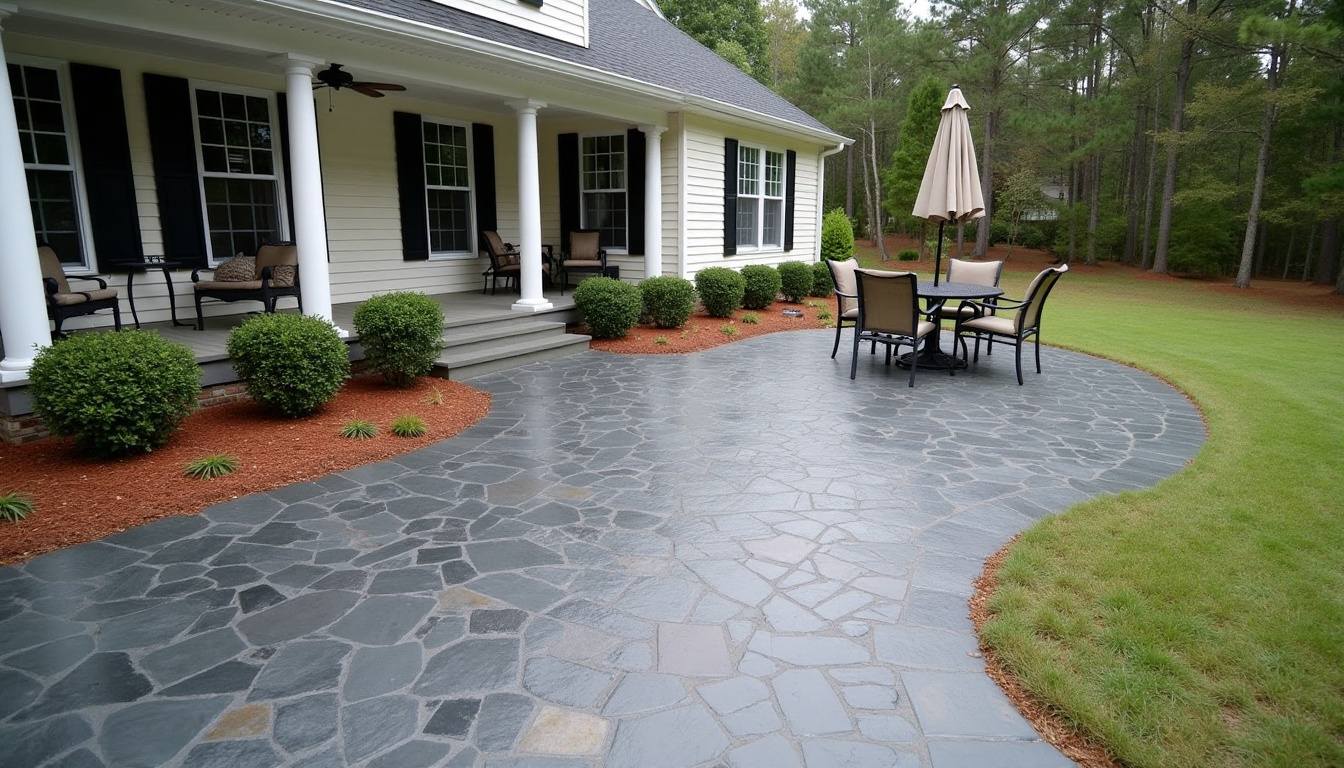
Stamped concrete is regular concrete pressed with textured mats while it is still workable, so the finished surface looks like slate, flagstone, brick, cobble or wood plank. Color comes from two places: an integral color mixed into the whole batch, and a release powder or liquid that leaves darker tones in the low spots of the pattern. Together they give the variation that keeps stamped work from looking like one flat color.
Ashlar slate and random stone patterns are popular because they forgive small imperfections and suit brick homes. Grays, charcoals and warm tans tend to sit well against red brick and pine straw. A smooth or lightly textured border around the edge frames the pattern and gives a clean line along the lawn. We bring color samples and pattern pictures to the estimate so you can judge them outdoors, in your own light.
Exposed aggregate
Exposed aggregate is for people who want texture and grip. After the concrete is placed, the top layer of cement paste is washed away to reveal the stones mixed into the batch. The result is rough enough to walk on barefoot around a pool without slipping, and it hides dirt and leaf litter better than a smooth surface. It also pairs well with a plain broom-finish slab, and some homeowners use a strip of aggregate as a border between the two.
The stone choice matters. Rounded river gravel gives a softer look; crushed stone is more angular and rugged. We show you what is available before the order goes in. Like stamped work, exposed aggregate holds up best with a sealer, which deepens the color of the stones and keeps sap from settling into the gaps between them.
Drainage and slope
Florence gets a lot of rain, often all at once. A patio poured dead level, or worse, tipped toward the house, sends that water straight at the foundation or the back door. We build in a gentle fall away from the house so water sheets off the far edge, and we look at where it goes from there: lawn, a bed, a swale or a drain, not a neighbor's yard.
Base prep matters as much here as anywhere. Sandy loam over clay drains well on top and poorly underneath, so a patio laid on loose fill can settle at the corners, or along the edge where roof runoff hits it. We strip the topsoil and roots, compact a stone base, and pay close attention to downspouts that empty onto the patio area; sometimes the right move is to extend one before we pour. It is the same base work we do on back yards over in Darlington, where lots run bigger and the soil is no different.
Sealing and upkeep
Tall pines are pleasant to sit under and hard on concrete. Their needles collect in joints and stain the surface as they break down, and sap drips leave dark spots that are tough to scrub out of bare concrete. Live oaks drop leaves and tannins that do much the same. A good sealer gives the surface a barrier so stains wipe off instead of soaking in, and on stamped and colored work it brings the color back up and protects it from the summer sun.
Plan on resealing every few years, depending on how much shade and foot traffic the patio sees. Between coats, a leaf blower and an occasional rinse are most of the upkeep, and pine straw should not be left piled against the slab edge. Every job is priced after we have measured it on site and looked at the base, with the price in writing before any forms go down, and the quote says plainly whether sealing is included.
Related
Concrete Driveways
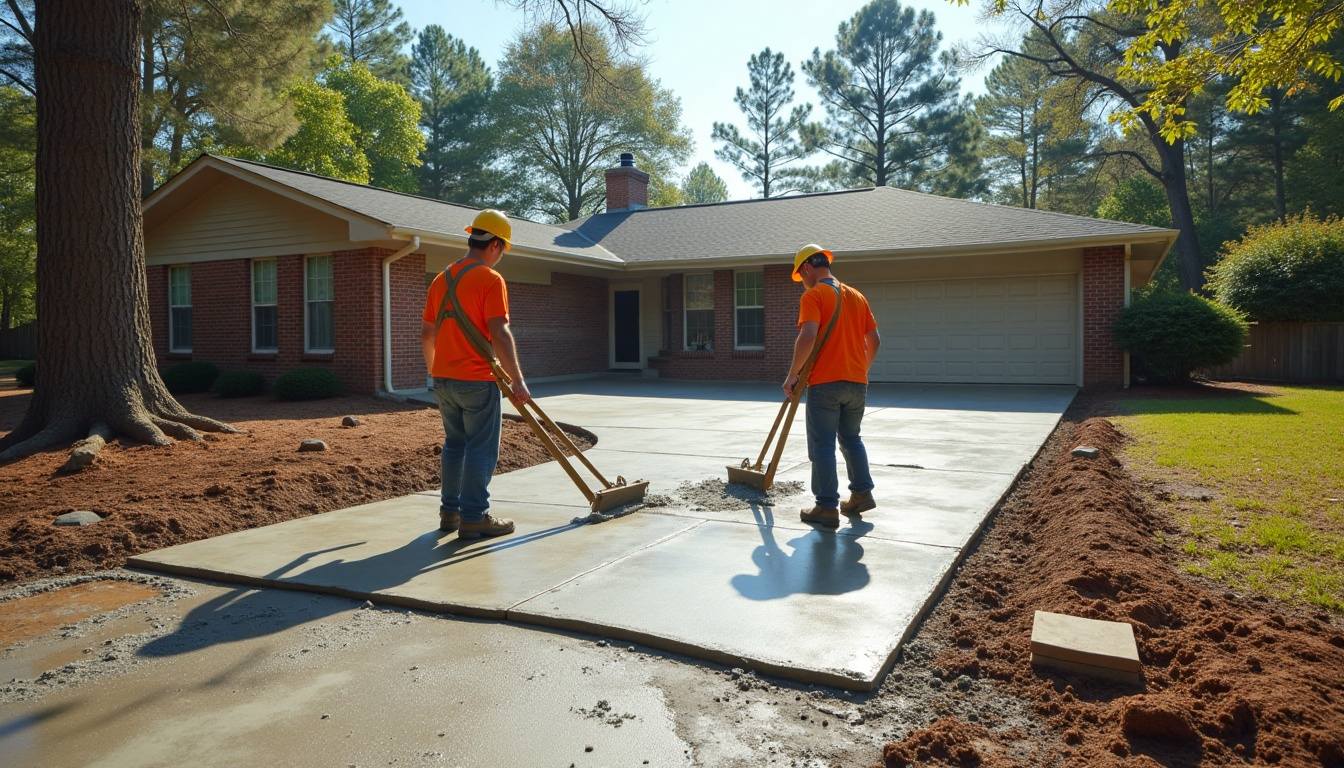
Every drive is poured on a compacted base built for Pee Dee sand.
Slabs, Foundations and Garage Floors
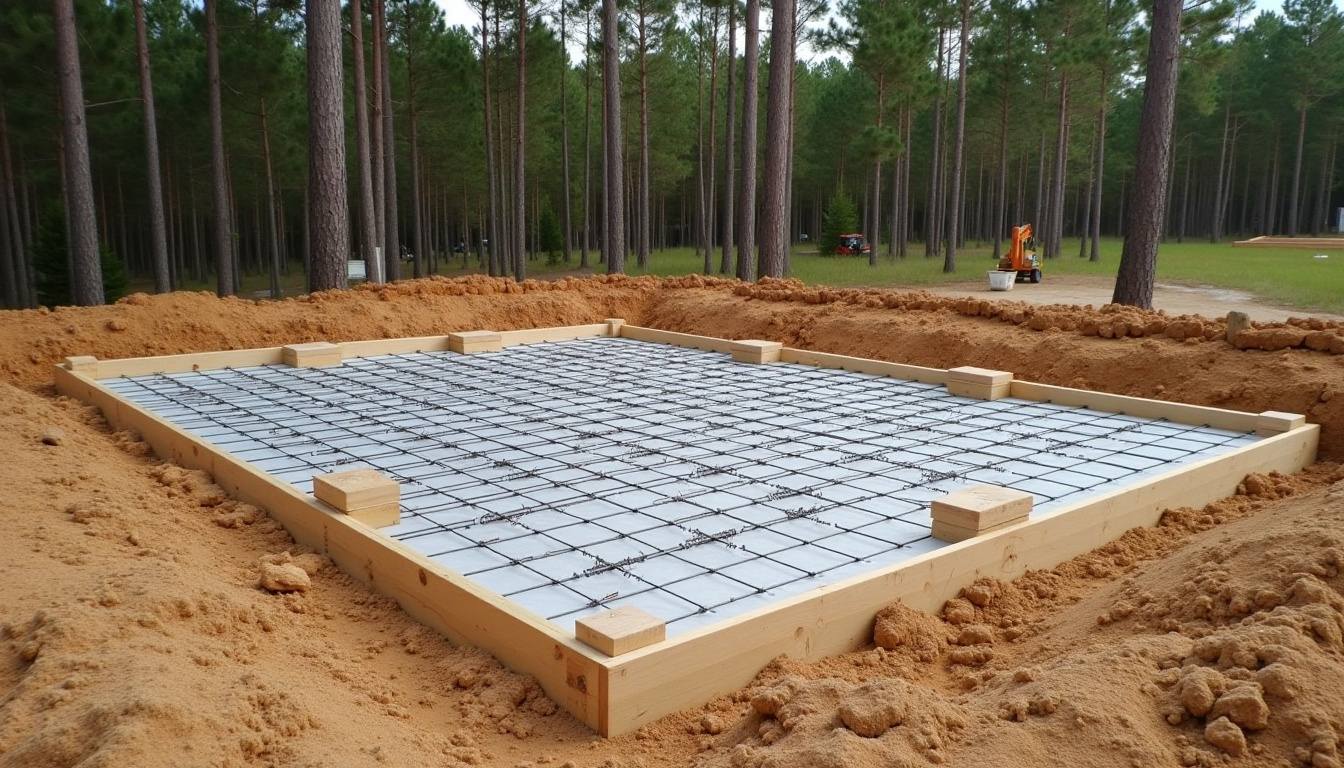
Every slab is compacted, vapor-barriered and poured early to beat the heat.
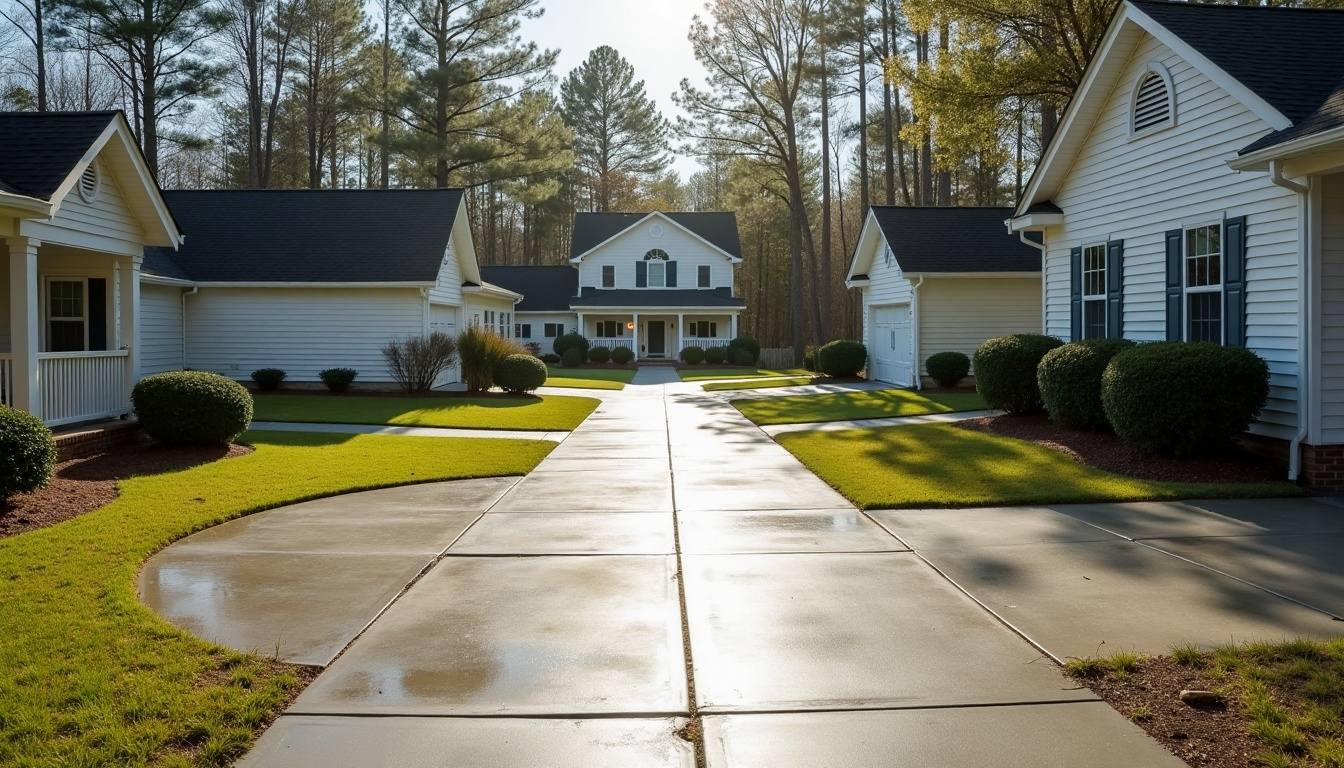
Driveways, Patios and Slabs in Darlington
Driveways, patios and slabs, measured on site and quoted in writing.
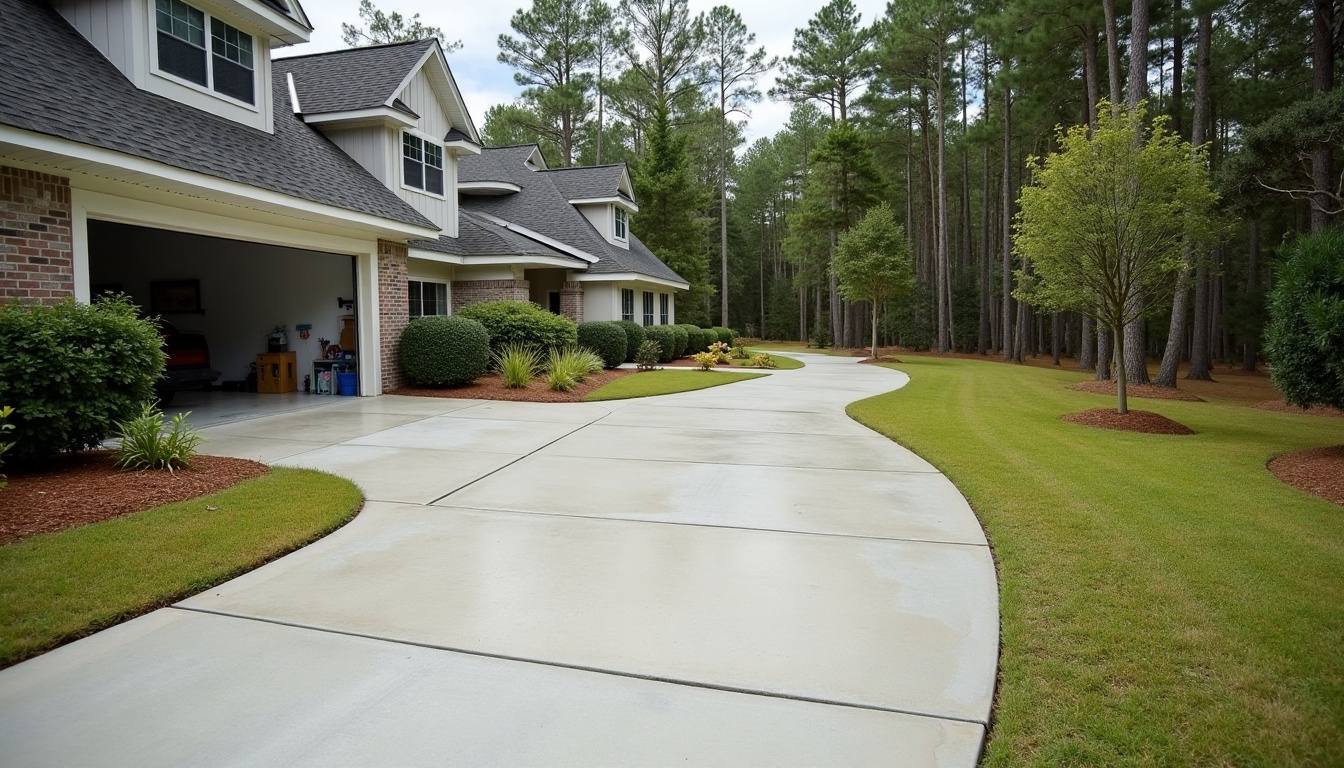
Slabs and Driveways Around Effingham
Slabs, driveways, shop floors and aprons, measured on site and quoted in writing.
Plan your patio
Send the quote form with a few lines about what you have in mind: rough size, plain or stamped or aggregate, and anything that is out there now, like an old cracked slab, a set of back steps or a tree you want to keep. If you already have a color or pattern in mind, type it in, and we will bring samples close to it when we come out to measure.