
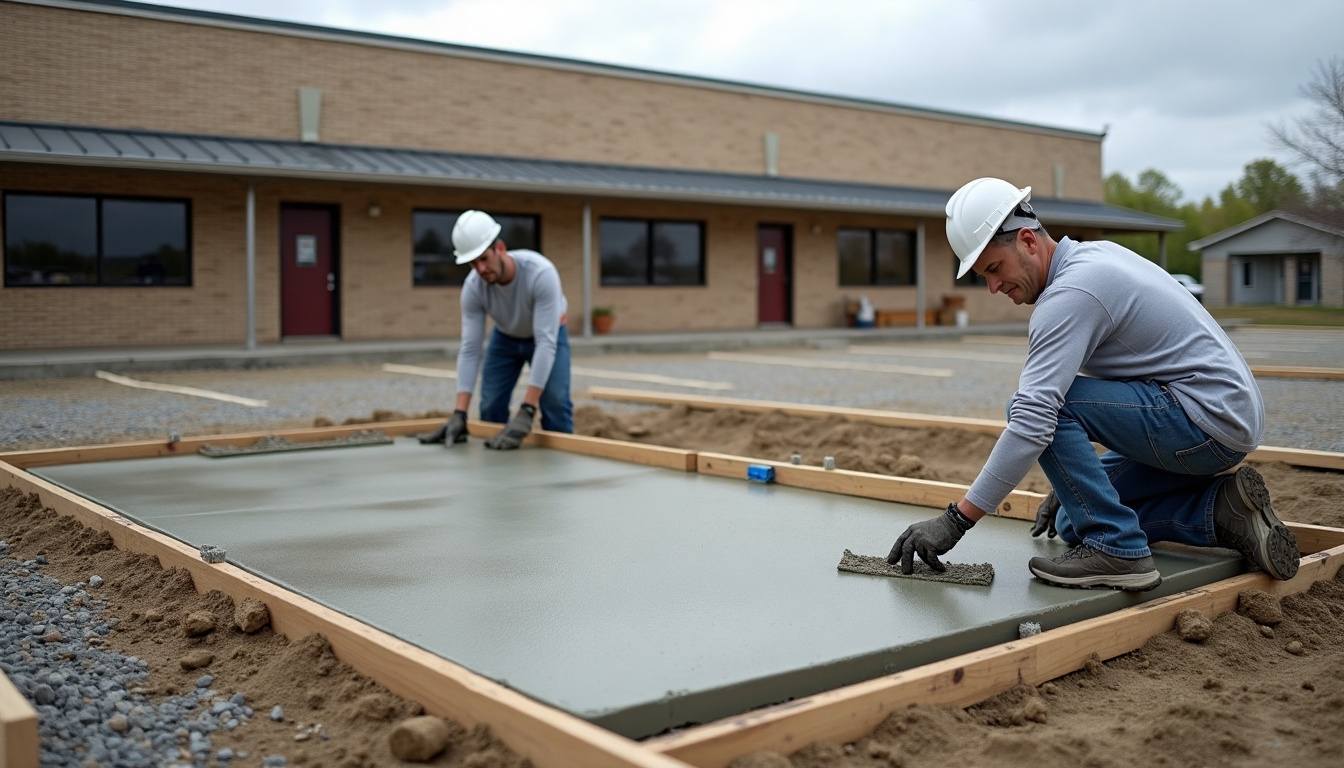
Commercial Concrete
Commercial concrete is judged by traffic. A dumpster pad has to survive a loaded garbage truck setting its front wheels down on it every week; a loading apron takes box trucks turning in place; a church parking area has to handle a full lot on Sunday and drain clean after a summer storm. We pour concrete for small businesses, offices, shops, churches and property owners across the Pee Dee, sized for the loads it will actually see.
Jobs we take on
Most of our commercial work is the concrete around a building rather than the building itself. That includes dumpster pads and enclosure slabs, loading and delivery aprons, parking areas and drive lanes, curb and gutter, sidewalks and ramps, and entry slabs at doors. We also pour building slabs and foundations for smaller commercial buildings, shops and metal warehouses, using the same compaction and moisture-barrier approach we use on shop and garage slabs for homeowners, scaled up for the loads.
Repair is a big part of the commercial side too. Broken dumpster pads, sunken sections of a drive lane, crumbling curb and trip hazards on a walk all invite complaints. We can cut out and replace failing sections, and the same approach we take on cracked and sunken concrete at homes applies here: find out why it failed before pouring anything back.
Built for heavy loads
Loads are what separate commercial work from residential. A garbage truck's front axle landing on a dumpster pad puts a concentrated load on a small area, over and over. Those pads need more thickness, more steel and a firm base, and they need to extend far enough out that the truck's wheels land on concrete instead of on the asphalt edge, where the damage usually starts. Loading aprons and drive lanes for delivery trucks get the same treatment.
The ground matters as much as the concrete. Sandy loam over clay makes a reasonable base when it is compacted well and kept dry, and a poor one when runoff from a large roof or parking lot gets under the slab edge. Commercial sites shed a lot of water, so we set grades and joints with drainage in mind and talk through where the water from the roof and paved areas ends up.
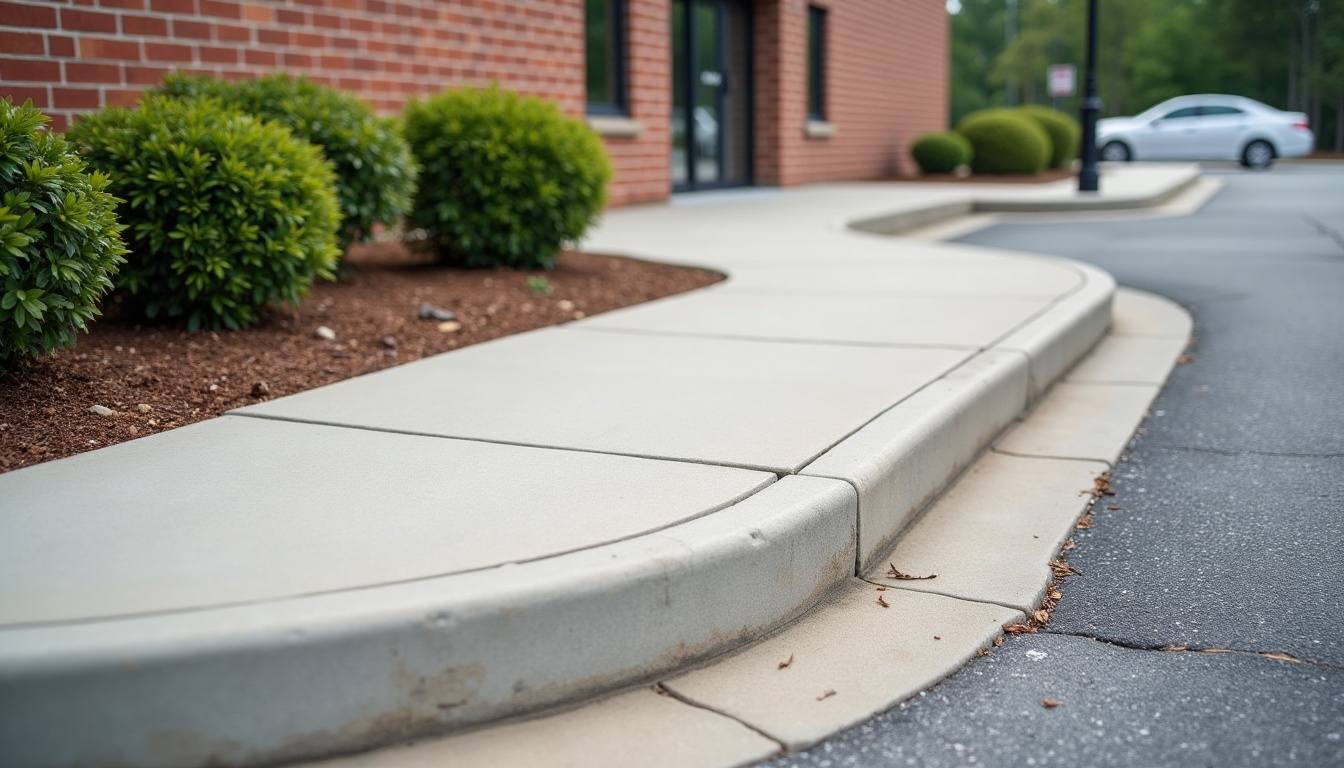
Finish and edges matter on commercial work too. Walks and ramps get a broom finish laid crosswise so they stay grippy when wet, and any sidewalk or ramp tied to a building entrance has to meet the slope and landing rules that apply to it, which we check against the plans before forming. Curbs get a smooth, tooled face that sheds water and resists chipping from tires and carts. Slab edges where cars roll on from asphalt get thickened so they do not snap off. On parking areas we lay out joints to line up with the striping where we can, which keeps cracks from wandering through the middle of a space and makes the lot read clean once the lines are painted.
Scheduling around your hours
A business cannot just close for a week while concrete cures. We plan pours in phases where we can, so part of a lot or an entrance stays open while the other part is formed and poured. Many jobs start at first light, which also suits concrete in summer: afternoon heat in the 90s and pop-up storms are both hard on a fresh pour, so an early start gets it placed and finished before the heat builds and the storms roll in.
We talk through cure times up front: when foot traffic can come back, when cars can, and when the heavy trucks can return. If a dumpster pad is being replaced, we work out with you where the container sits in the meantime. We pour across Florence County and the nearby Pee Dee towns, from Darlington and Hartsville to Lake City and Marion, and we are glad to work with property managers who want one point of contact for several sites.
Permits and the right-of-way
Commercial concrete often touches public property. A new curb cut, a driveway apron or a sidewalk along the street sits in the right-of-way, and inside Florence city limits that work generally needs a permit from the city. Where a site fronts a state-maintained road, an SCDOT encroachment permit comes into play, and outside the city, county rules apply. We find out what each job needs before we schedule it, so the timeline we give you already accounts for the paperwork.
Utility locates come before any digging, and commercial lots usually have more lines to find: water and sewer taps, gas, power, phone and fiber, irrigation, and sometimes old lines nobody has records for. Every job is priced after we have measured it on site and looked at the base, with the price in writing before any forms go down. That holds whether it is a single dumpster pad behind a restaurant in Florence or a run of new sidewalk for a shop owner up the road in Hartsville.
Related
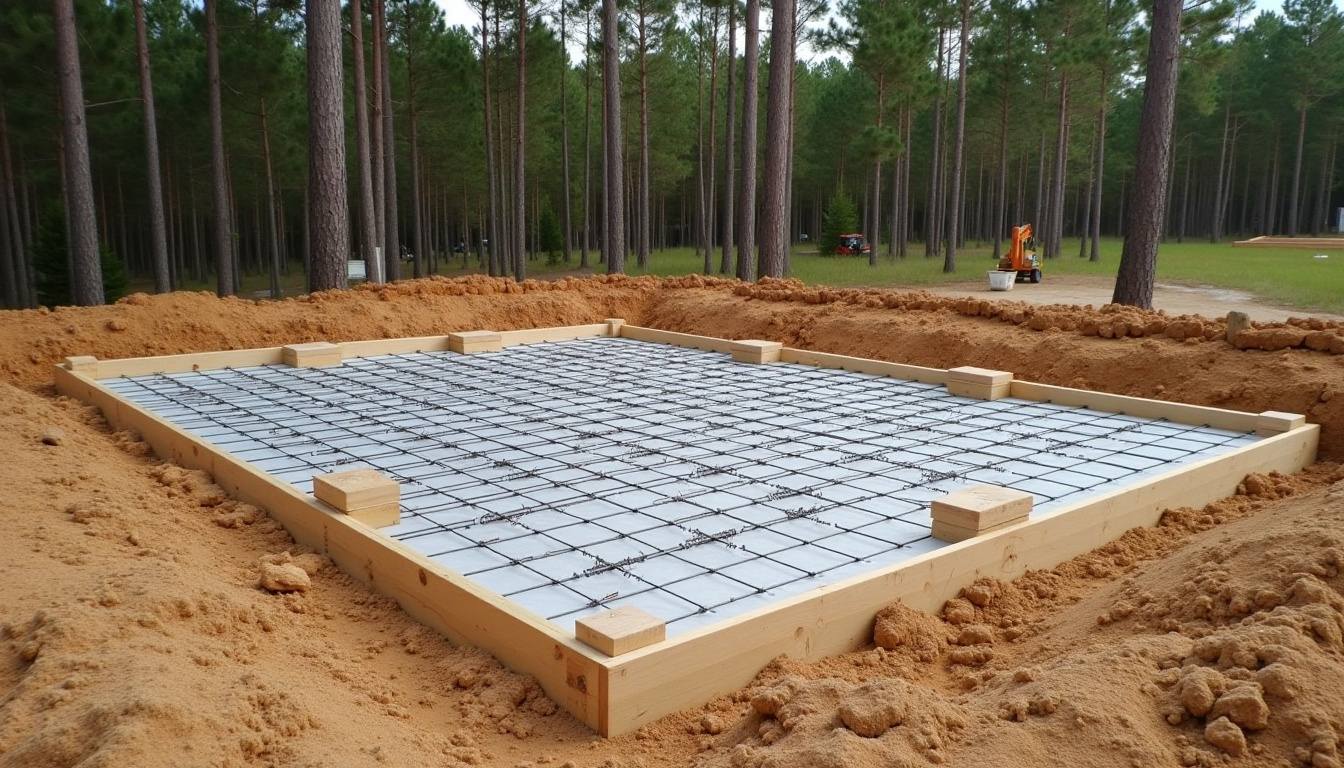
Slabs, Foundations and Garage Floors
Every slab is compacted, vapor-barriered and poured early to beat the heat.
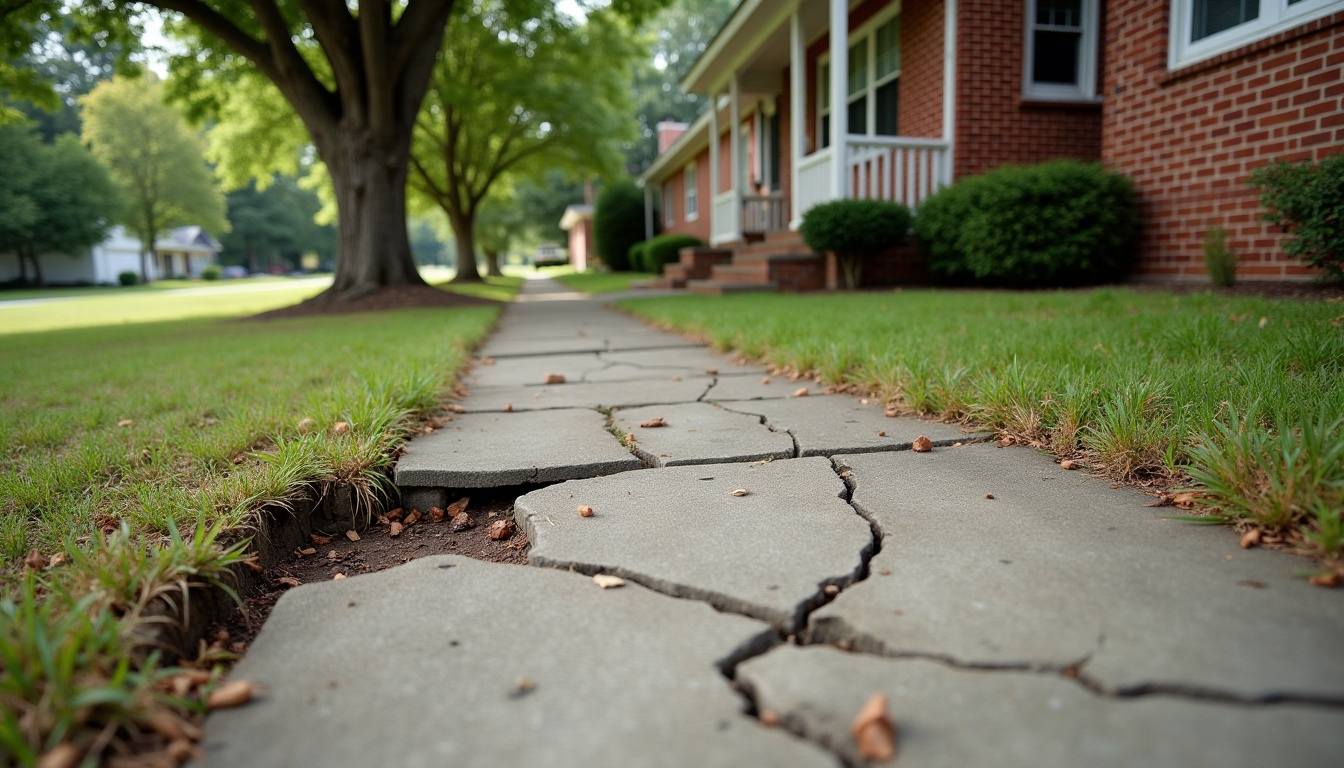
Concrete Repair and Replacement
We find out why it broke before we fix it.
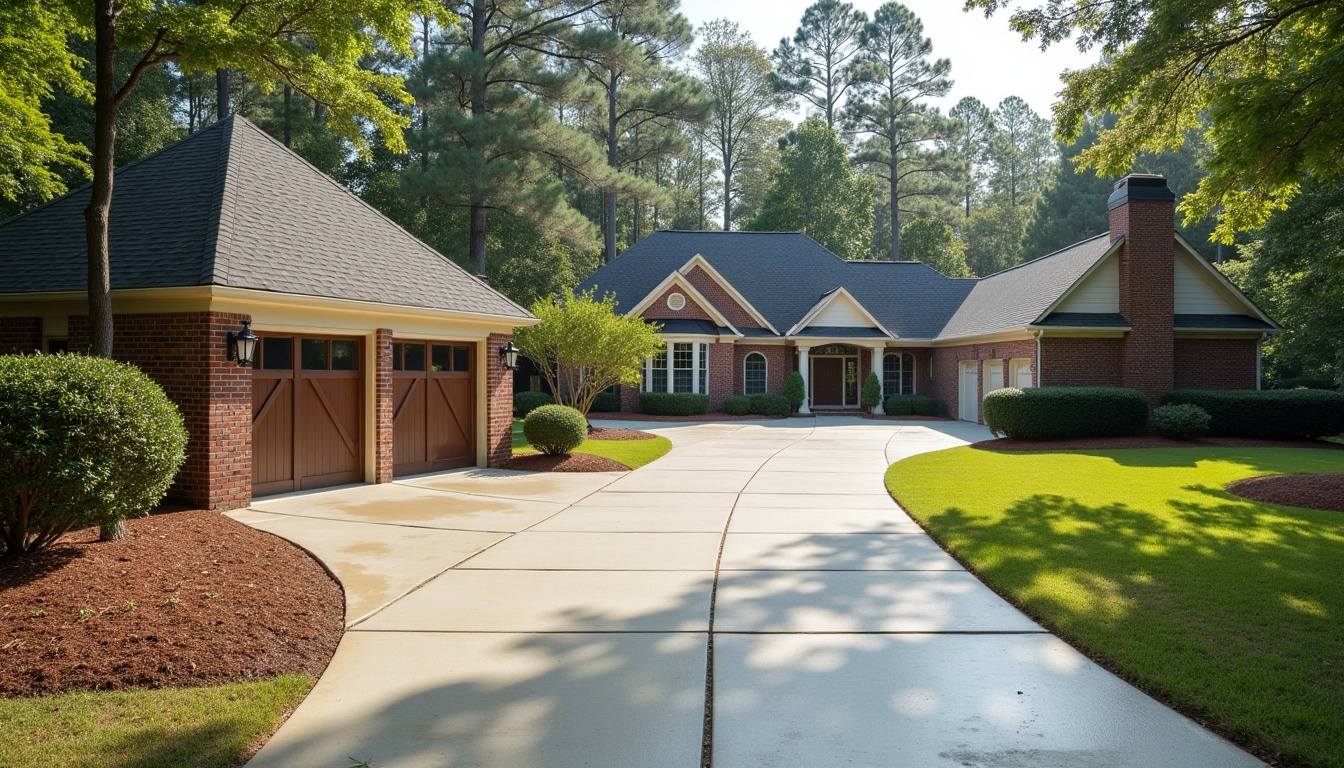
Concrete Work Across Florence
We check the base and drainage first, then quote in writing.
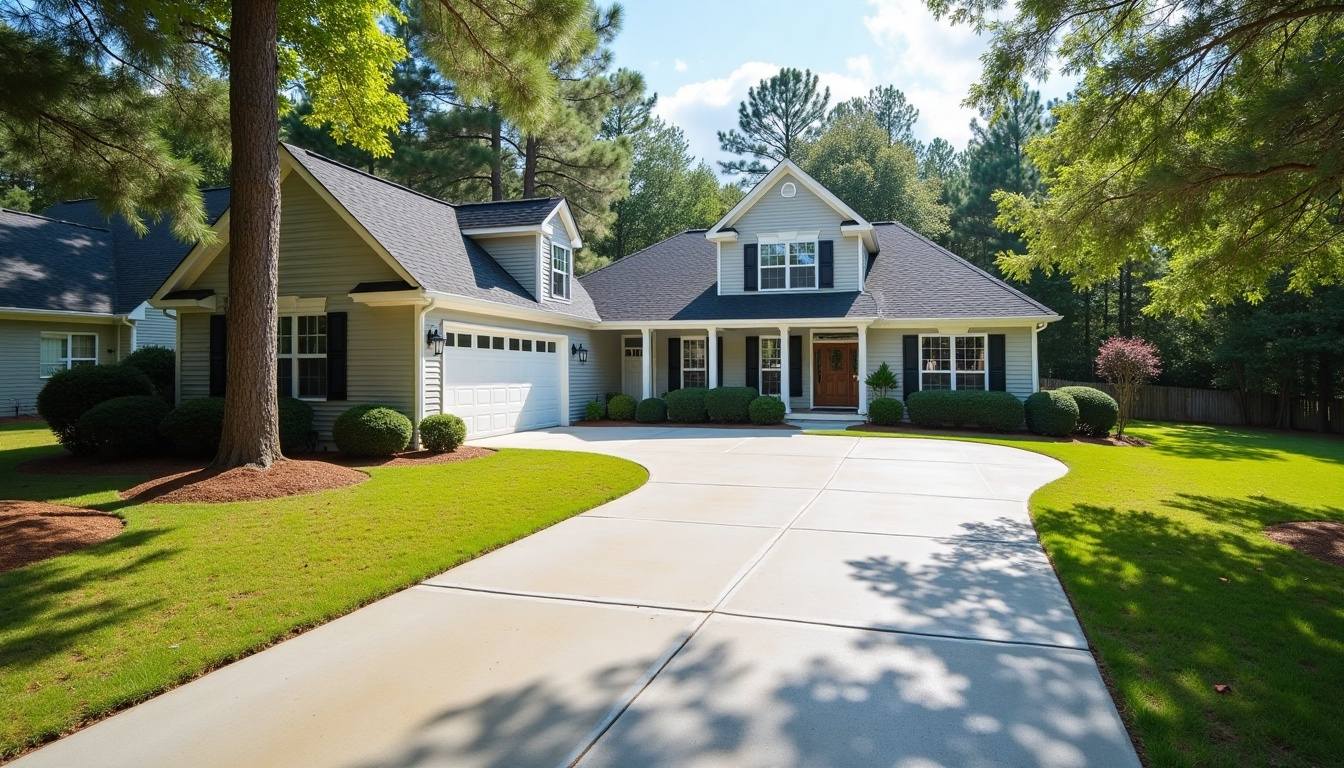
Concrete for Hartsville Homes and Businesses
Patios, driveways, slabs and commercial pours, quoted in writing.
Get a commercial quote
Use the quote form with your name, a phone number, the site address and a short description of the work: the size of the pad or lot, what kind of trucks use it, whether the business has to stay open during the job, and any deadline you are working against. We call back, walk the site with you or your property manager, and send a written quote. If the job comes with a site plan or an engineer's drawing, mention it in the message and we will ask for a copy when we call.